
Making sense of our connected world

A lion for sustainable AI: How to support a new standard for sustainability reporting?
The Sustainability of AI is missing proper standards. The EU’s CSRD is a reporting tool that might be a new directive. But is it a toothless paper tiger or a sharp lion?

Sustainable AI – How environmentally friendly is AI really?
Sustainable AI is becoming increasingly important. But how sustainable are AI models really? And what recommendations can be made? Read about our investigations of small-scale AI projects.
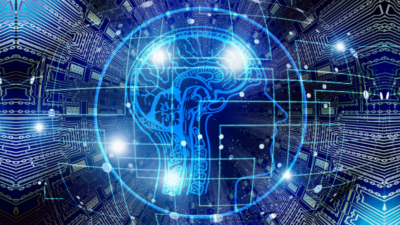
AI as a flying blue brain? How metaphors influence our visions of AI
Why is Artificial Intelligence so commonly depicted as a machine with a human brain? This article by Johanna Teresa Wallenborn shows how one misleading metaphor became so prevalent.

Exploiting potentials: Teaching AI Systems to See Accessibility Barriers
Barriers in our physical environment are still widespread. While AI systems could eventually support detecting them, it first needs open training data. Here we provide a dataset for detecting steps and stairs.

Explaining AI – How to explain the unexplainable?
Complex automated decision making systems have become ubiquitous in our everyday lives. Should we even care to understand how AI-based decisions are made?

Civil Society and AI: Striving for ethical governance
Civil society participation is key to ensure an ethical and equitable AI. But what are the challenges facing societal actors who want to actively engage in governance processes?


Governing AI: Political players between vision and regulation
Not only tech giants in Silicon Valley influence the development of artificial intelligence (AI): supranational political institutions, states and parties are also active leaders and regulators. They set legal standards, formulate strategies for the future, explore potentials and dangers, promote and sanction or even adopt controversial positions. How do political actors position themselves in the AI debate between economic interest, ethical controversies and the common good? Where do their strategies differ? Is politics here more of a driver or a driven force?

Algorithmic decisions and human rights
Who is responsible if an autonomous vehicle is involved in an accident? What are the consequences of automated profiling of the unemployed? How intelligent is our use of artificial intelligence, and what visions and strategies do we need for the future? Innovations in the field of artificial intelligence are impacting nearly every area of our everyday life. However, algorithmic decision-making leads to complex human rights implications. In this dossier researchers of the Humboldt Institute for Internet and Society and the NoC European Hub discuss the role of law and ethics in the context of algorithmic decision-making.