
NEWS FROM THE INSTITUTE
We are hiring!
You are interested in internet-enabled innovation, open innovation and entrepreneurship? Then apply as a scientific project manager at our institute and join HIIG’s international…
Out now: HIIG Quarterly
2018 has gotten off to an exciting start! Read HIIG’s Quarterly newsletter to learn more about our plans for this year, digital research mining,…
Kick-off: Digital REseArch Mining (DREAM)
How can we facilitate accessing scientific literature in the digital age? The aim of our new project with FZI Forschungszentrum Informatik is to develop…
Special Issue on political micro-targeting
Since Cambridge Analytics, micro-targeting is hyped as a tool capable of tailoring political messages to individuals. Shifting the focus away from the US, Internet…
Dossier: Algorithmic decisions and human rights
From smart assistants in the justice, over systems in the administration sector to highly developed portable devices: Innovations in AI are impacting nearly every…
Workshop: AI & governing communication online
Artificial intelligence technology has increasingly found applications in the area of content moderation and communication governance on digital platforms. What are the risks for…
UPCOMING EVENTS
More to come soon.
Explore our current issues
while we reshape our research agenda…
More to come soon.
Explore our current issues
while we reshape our research agenda…
Featured Topics

Platform governance

Data governance

Artificial intelligence and society

Digitalisation and sustainability

Open higher education

Digital future of the workplace

Here you will find our experts on current press topics relating to the Internet and digitalisation.
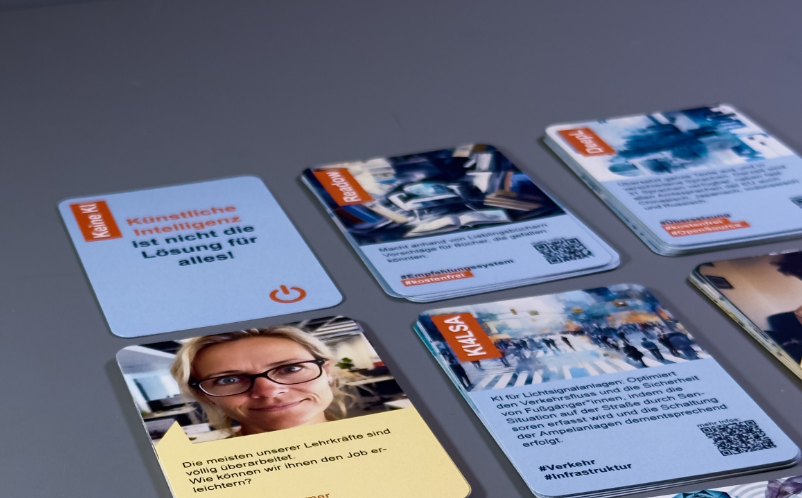
Everyone is talking about artificial intelligence (AI). But what is all the hype? Find out with this card game.

Our new handbook provides guidance on the legally compliant and efficient use of data for administrations.

Can AI strengthen democracy? A data collection on AI projects aiming to serve democratic processes
This article introduces a dataset of 98 AI projects claiming to serve democracy, built to help researchers test these claims.

Between accusations of censorship and platform power: What the Digital Services Act actually regulates
The DSA is increasingly attacked as “censorship law”. This article argues: Its core purpose is to protect freedom of expression online.

Democracy at the ballot: Results from our voting booth at the Long Night of Sciences
We invited Berliners to share their feelings and opinions about democracy in Germany. The results will be published here soon.